- All
- Product Name
- Product Keyword
- Product Model
- Product Summary
- Product Description
- Multi Field Search
Views: 0 Author: Site Editor Publish Time: 2025-09-11 Origin: Site

You might wonder, is styrofoam recyclable? The answer depends on the type of foam packaging you have. Most curbside programs do not accept foam, so you need to check local rules. Common types include EPS (expanded polystyrene), PE (polyethylene), and PU (polyurethane). Here’s how their recycling rates and recyclability compare:
EPS: Specialized recycling centers may accept it, but most curbside bins do not. Is styrofoam recyclable in practice? In North America, the EPS Industry Alliance reports a 31% recycling rate, but actual consumer rates are closer to 1%.
PE: More recyclable, but acceptance still varies by location.
PU: Rarely recyclable through regular programs.
You can see why knowing your foam type and local recycling options matters. Even if you use a food packing machine, always check if your foam is recyclable.
Not all foam packaging is recyclable. Check local rules to know what types are accepted.
Expanded polystyrene (EPS) is commonly used but often not accepted in curbside recycling. Specialized drop-off centers may take it.
Polyethylene (PE) foam is more recyclable than EPS. Always ensure it is clean and check local guidelines.
Polyurethane (PU) foam is rarely recyclable. Consider reusing or donating it instead of throwing it away.
Biodegradable packing peanuts are compostable, not recyclable. Test them by placing them in water to see if they dissolve.
Prepare foam for recycling by cleaning it and removing labels. This increases the chances of it being accepted.
Use online tools to find local recycling centers that accept foam. Many retailers also have drop-off programs.
Choose eco-friendly packaging alternatives to reduce foam waste. Support brands that prioritize sustainable materials.
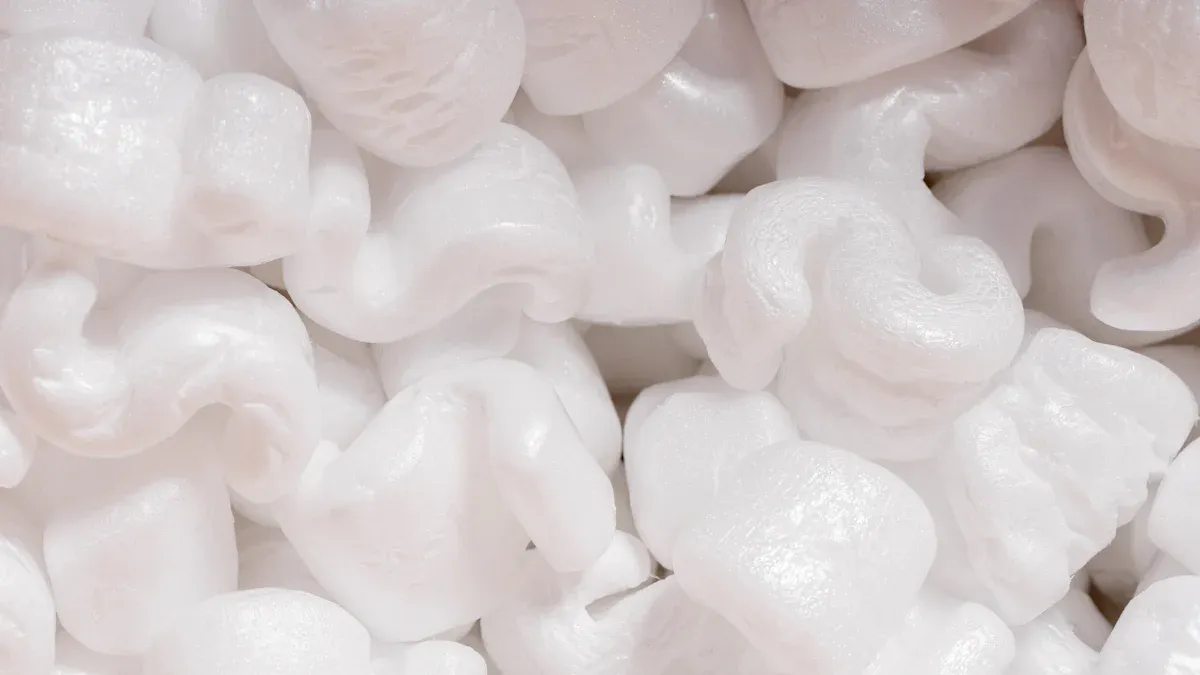
When you look at packaging materials, you will notice several types of foam packaging used in both consumer and industrial products. Each type has different uses and recycling options. Understanding these differences helps you make better choices for the environment.
EPS foam, also known as expanded polystyrene packaging or Styrofoam, is one of the most common materials you see in shipping and food containers. You will find it in:
Takeout food boxes and coffee cups
Protective packaging for electronics and appliances
Insulation panels for buildings
Shipping coolers and medical transport boxes
EPS foam is lightweight and protects fragile items well. Many companies choose it because it is cheap and easy to shape.
You might wonder if styrofoam packaging is recyclable. Most curbside recycling programs do not accept it. Many cities have started to ban EPS products because of environmental concerns. For example:
Los Angeles banned EPS foam in April 2024.
Chicago does not accept Styrofoam in blue bins. You must use drop-off sites or mail-back programs.
New York and more than 100 other places have banned EPS foam.
Expanded Polystyrene and Styrofoam are non-biodegradable materials, remaining in the environment for hundreds of years. They contribute to plastic pollution, harming marine life and ecosystems. Chemicals like styrene and ethylbenzene leach into the ground, polluting water sources. Wildlife often ingests these materials, leading to starvation or poisoning, which can also affect the human food chain.
Because of these problems, you should always check local rules before trying to recycle EPS foam. Specialized drop-off centers may accept it, but most regular recycling bins will not.
Polyethylene foam is another popular choice for foam packaging. You will see it in:
Cushioning for electronics and furniture
Sports equipment padding
Medical device shipping
Protective inserts for toolboxes
This material is flexible and absorbs shocks well. It comes in many forms, such as sheets, rolls, and custom shapes.
Polyethylene foam is more recyclable than EPS foam. Some recycling centers accept it, especially if it is clean and free from labels or tape. You should always check with your local recycling program to see if they accept this type of foam packaging. Polyethylene foam is often labeled with a resin code, which helps you identify if it is recyclable in your area.
Polyurethane foam appears in many products you use every day. You will find it in:
Furniture cushions and mattresses
Car seats and headrests
Soundproofing panels
Packaging for delicate items
This foam is soft and flexible, making it ideal for comfort and protection.
Recycling polyurethane foam from packaging waste is difficult. The process uses a lot of energy and special binders, which makes it less efficient. Transporting bulky foam to recycling centers costs a lot and is not practical for most people. Also, foam packaging often gets mixed with other materials, which makes recycling even harder. Because of these challenges, most polyurethane foam ends up in landfills.
Tip: If you cannot recycle polyurethane foam, try to reuse it at home or donate it to local organizations that can use it for crafts or packing.
You may have noticed that not all packing peanuts look or feel the same. Traditional packing peanuts often use polystyrene, which does not break down in the environment. Biodegradable packing peanuts offer a greener alternative. These peanuts usually come from renewable resources like cornstarch or wheat. You can tell them apart by their texture and how they dissolve in water. If you drop a biodegradable peanut in water, it will start to break down quickly.
When you think about disposal, you should know that biodegradable packing peanuts are designed for composting, not recycling. Most recycling centers do not accept them because they do not contain plastic. Instead, you can add them to your home compost bin. Many municipal organics programs also accept these peanuts with food scraps and yard waste. This makes disposal easy and eco-friendly.
Tip: To test if your packing peanuts are biodegradable, place one under running water. If it dissolves, you have a compostable product.
Biodegradable packing peanuts bring several environmental benefits:
They break down naturally in composting systems, leaving no toxic residue.
Their production uses renewable resources, which helps lower carbon emissions.
They do not harm wildlife or pollute waterways if they escape into the environment.
You might wonder if you can recycle these peanuts. The answer is no. Recycling centers focus on plastics, metals, and paper. Composting is the best way to handle biodegradable peanuts. If you do not have a compost bin, check if your city collects organic waste. Many cities now offer curbside pickup for compostable materials.
Here is a quick comparison:
| Feature | Biodegradable Peanuts | Polystyrene Peanuts |
|---|---|---|
| Made from | Cornstarch, wheat | Petroleum-based |
| Disposal method | Compost | Landfill/recycling |
| Environmental impact | Low | High |
| Wildlife safety | Safe | Harmful |
You can help the planet by choosing biodegradable packing peanuts. They offer a simple way to reduce waste and support a healthier environment. Next time you receive a package, check the type of peanuts inside. If they are compostable, you can feel good about putting them in your compost pile or green bin.
You might ask, can you recycle styrofoam in your curbside bin? Most curbside recycling programs do not accept Styrofoam. Several reasons make this material difficult for local programs to handle:
Styrofoam is lightweight and bulky, which makes transportation expensive and inefficient.
The material has low economic value, so few companies want to recycle it.
Its fragile structure leads to high contamination risk and can clog sorting machines.
Many recycling facilities lack the right equipment to process flexible foams.
Because of these challenges, you usually cannot place Styrofoam in your regular recycling bin. Always check your city’s guidelines before you try to recycle Styrofoam at home.
Some communities offer drop-off centers for foam recycling. These centers collect clean, dry Styrofoam and send it to specialized facilities. You may need to remove labels or tape before dropping off your foam. Drop-off centers often accept packing blocks, coolers, and food containers, but not all types of foam. You should call ahead or check online to see what your local center accepts. This option gives you a way to recycle Styrofoam when curbside programs do not help.
Specialized recycling centers use a process called densification to recycle Styrofoam. Densifiers compress the foam, removing air and reducing its size. This step makes it easier to transport and process. The densifier process changes the original volume of Styrofoam dramatically. Take a look at the table below:
| Original Volume | Compressed Volume | Benefits |
|---|---|---|
| 1 unit | 1/50th to 1/90th unit | Easier transport and storage, smoother surface for recycling, additional income from selling ingots |
After densification, the compressed foam becomes dense blocks or ingots. These blocks can be shipped to manufacturers who turn them into new products like picture frames, molding, or insulation panels.
You need densifiers because Styrofoam’s original form is mostly air. Without densification, transporting large amounts of foam would not make sense. The process also helps prevent foam from breaking apart and contaminating other recyclables. Densifiers make it possible for specialized centers to recycle Styrofoam efficiently and economically. This technology increases the chance that your foam waste will become something useful instead of ending up in a landfill.
Note: If you want to recycle Styrofoam, look for local drop-off centers with densifier equipment. This step gives your foam the best chance to be recycled.
Recent advances in foam recycling technology show promise. For example, researchers have developed ways to turn recycled mattress foam into pellets for sneaker soles, using up to 75% recycled content. Some new methods use custom-designed machines to process polyurethane foams, aiming to increase recycled content in insulation panels. These innovations could make foam recycling more common and effective in the future.
Knowing how to spot recyclable packaging is the first step in making sure your foam does not end up in a landfill. You can use two main methods: checking resin codes and looking for visual clues.
Resin codes help you figure out if your foam packaging is recyclable. These codes appear as numbers inside a triangle, usually on the bottom or side of the product. Here is what you need to know:
#6 (EPS or PS): This code stands for expanded polystyrene, often used in foam cups and packaging blocks. Some recycling centers accept it, but most curbside programs do not.
#4 (PE): Polyethylene foam often carries this code. It is more likely to be accepted at specialized drop-off locations.
#7 (Other): This code covers mixed or unknown plastics, which are rarely recyclable.
You should always check the code before placing foam in a recycling bin. If you see a How2Recycle label, follow its instructions and confirm with your local facility.
Sometimes, you cannot find a resin code. In these cases, look for visual signs:
Texture: EPS foam breaks apart easily and feels lightweight. Polyethylene foam feels more flexible and rubbery.
Color: Most foam packaging is white, but some types come in black or gray.
Labels: Some packaging features recycling symbols or instructions.
You can also use this table to understand how widely different packaging types are recycled:
| Recycling Status | Description |
|---|---|
| Widely Recycled | Greater than 60 percent of the U.S. can recycle the item through curbside or municipal drop-off. |
| Limited | Only 20–60 percent of the U.S. can recycle the item through curbside or municipal drop-off. |
| Not Yet Recycled | Less than 20 percent of the U.S. can recycle the item through curbside or municipal drop-off. |
| Store Drop-Off | Can be recycled if brought to participating store drop-off locations, typically at grocery stores. |
Tip: When in doubt, check your city’s recycling guide or ask your local recycling center.
You need to prepare your foam packaging properly before recycling. Clean, sorted foam has a much better chance of being accepted and actually recycled.
Remove all food residue, dirt, or liquids from your foam packaging. Rinse containers and let them dry. Dirty foam can contaminate other recyclables and may cause the whole batch to be rejected.
Peel off any stickers, tape, or labels. These materials can interfere with the recycling process. If you have large pieces, break them down so they fit easily into collection bins or bags.
Here are the best practices for preparing foam for recycling:
Identify if your foam is accepted for recycling, focusing on types like EPS foam packaging and clean food containers.
Find a specialized recycling center, since most curbside bins do not accept foam.
Clean the foam, break down large pieces, and bag it separately to avoid contamination.
Use foam recycling machines, such as densifiers or shredders, if available.
Take your prepared foam to a recycling facility or drop-off point.
Note: Clean, sorted foam increases the chance that your recyclable packaging will be processed and reused.
You have several ways to find places that accept recyclable foam packaging. Using the right tools and programs makes the process easier.
Many websites and apps help you locate recycling centers. You can use resources like Earth911, RecycleNation, or your city’s waste management website. Enter your zip code and the type of foam you want to recycle. These tools show you the nearest drop-off sites and explain what materials they accept.
Some retailers and grocery stores offer drop-off programs for foam packaging. Look for collection bins near store entrances. These programs often accept clean, bagged foam blocks and trays. Always check the posted guidelines to make sure your foam meets their requirements.
Callout: Not all foam collected for recycling gets processed. For example, only about 6% of consumer foam and 12% of all foam collected actually gets recycled. For EPS foam, the rate is higher, with about 30% recycled overall. Post-consumer EPS has a 19% recycling rate, while post-industrial EPS reaches 25%.
| Type of Foam | Recycling Rate |
|---|---|
| Consumer Foam | 6% |
| Overall (including industrial) | 12% |
| EPS | 30% |
| Post-consumer EPS | 19% |
| Post-industrial EPS | 25% |
You can improve these numbers by preparing your foam correctly and using the right recycling locations. Every piece of recyclable foam packaging you divert from the landfill helps protect the environment.
Sometimes, you cannot recycle packaging foam. You need to know the best ways to dispose of it without harming the environment. Responsible disposal helps keep communities clean and reduces pollution.
Most non-recyclable foam ends up in landfills. You should only use this option when no recycling or reuse choices exist. Foam takes up a lot of space and does not break down quickly. Before throwing foam away, check if your local waste management service offers special programs for foam disposal. Some areas have drop-off sites or collection events for bulky waste.
Tip: Never put hazardous foam waste in your regular trash or recycling bin. Look for local hazardous waste collection events or facilities if you suspect your foam contains chemicals.
Some cities use waste-to-energy plants to handle non-recyclable materials. These facilities burn waste to create electricity or heat. If your area has this option, you can send foam to these plants instead of a landfill. Waste-to-energy reduces the volume of trash and produces useful energy. Always check with your local waste authority to see if they accept foam for this process.
You can also consider these responsible disposal steps:
Use local waste management services that offer foam recycling or disposal programs.
Contact professional packing foam recycling services for convenient pickup.
Explore specialized foam reclamation facilities that process foam materials.
Engage with upcycling workshops or artisans who repurpose foam waste.
Reuse non-recyclable packing materials whenever possible.
Reduce waste by avoiding the purchase of non-recyclable foam products.
You can give packaging foam a second life by reusing it at home or donating it. Creative reuse keeps foam out of landfills and supports your community.
Try these ideas to reuse foam packaging around your house:
Stamps: Cut foam into shapes and use them to make unique patterns on paper or fabric.
Foam Planters: Cover foam blocks with decorative paper, add soil, and plant small flowers or herbs.
Jewelry Organizer: Fit foam pieces into drawers and cut slots to hold rings, earrings, or bracelets.
Picture Frame: Design custom frames by shaping and decorating foam to display your favorite photos.
Kids’ Toys: Craft lightweight toys by cutting foam into fun designs for children to play with.
Cushions and Pillows: Use larger foam pieces as stuffing for homemade cushions or pillows.
Wall Art: Cut foam into interesting shapes, paint them, and hang them as unique wall decorations.
Coasters: Make colorful coasters by cutting foam and covering them with fabric or paper.
Note: Always clean foam before reusing it for crafts or home projects.
Many organizations accept clean foam packaging for reuse. You can donate foam blocks and sheets to local schools, art centers, or community groups. Teachers often use foam for classroom projects. Animal shelters may use foam for bedding or insulation. Call ahead to see what types of foam they accept. Donating foam helps others and keeps useful materials out of the landfill.
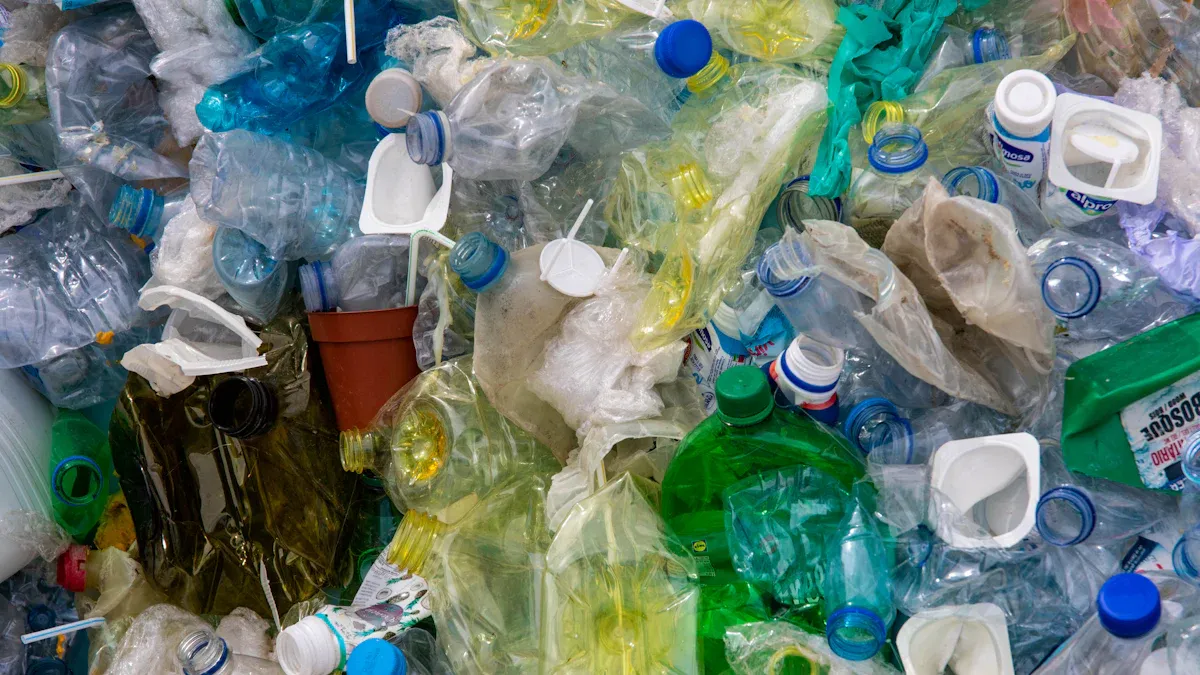
When you throw packaging foam away, it often ends up in a landfill. Foam, especially polystyrene, does not break down quickly. In fact, it can take hundreds or even thousands of years to decompose. This means that every piece of foam you toss today could still exist far into the future. The non-biodegradable nature of foam makes it a long-term problem for the environment. Landfills fill up with bulky foam, taking up valuable space that could be used for other waste.
Here is a table showing the main environmental consequences of foam waste in landfills:
| Consequence | Description |
|---|---|
| Non-biodegradability | Polystyrene foam takes hundreds of years to decompose, effectively making it non-biodegradable. |
| Harm to Wildlife | Animals often mistake plastic foam for food, leading to starvation or injury. |
| Release of Microplastics | Foam breaks down into smaller pieces, contributing to microplastic pollution in the environment. |
| Chemical Risks to Humans | Styrene, a component of foam, is a possible carcinogen and can leach into food and drinks. |
| Long-term Environmental Persistence | Foam waste can remain in the environment for thousands of years, posing ongoing threats. |
Foam pollution affects both land and water. When foam breaks apart, it creates tiny pieces called microplastics. These microplastics can travel through soil and water, harming plants, animals, and even people. Wildlife often eats foam by mistake, which can cause injury or death. Chemicals from foam, like styrene, may also leach into the ground or water, increasing health risks for humans. You can see how foam pollution creates problems that last for generations.
You might think that making foam recyclable would solve these problems. However, recycling foam is not easy or cheap. The lightweight and bulky nature of foam makes collection and transportation expensive. Trucks fill up quickly with foam, but the material itself weighs very little. This means higher fuel costs and more trips to recycling centers. Polystyrene and polyurethane foams also have complex chemical structures. Recycling them often requires advanced technology, which adds to the cost.
The logistics of foam recycling present even more challenges. Foam comes in many shapes and sizes, so sorting and cleaning take extra effort. Many recycling centers do not have the right equipment to handle foam. The low density of foam means it takes up a lot of space, making storage and processing difficult. You may find that only a few specialized facilities accept foam for recycling. These challenges make it hard for communities to offer foam recycling programs on a large scale.
Tip: Always check if your local recycling center accepts foam before you try to recycle it. This helps you avoid contamination and supports better recycling practices.
You see automation everywhere in today’s packaging industry. A modern food packing machine can handle tasks like filling, sealing, and labeling without much human help. This technology speeds up production and reduces mistakes. Automated machines also help you use materials more efficiently. You can program them to use only the amount of packaging needed for each product. This reduces waste, including foam packaging that often ends up in landfills.
Some companies now use machines that melt Styrofoam waste. For example, a Styrofoam melting machine uses controlled heat to turn foam into a compact, reusable form. This makes recycling easier and more cost-effective. You can see how automation not only saves time but also supports recycling efforts.
Efficiency matters when you want to reduce waste and save money. A food packing machine can pack products quickly and with less material. Machines with modular designs let you switch between different packaging types, including recyclable or compostable options. This flexibility means you can respond to new sustainability rules or customer demands.
Many advanced machines use less energy and support renewable energy sources. This lowers the carbon footprint of your packaging process. Some machines even track material use and waste, helping you find ways to improve. By choosing efficient equipment, you help protect the environment and keep your business competitive.
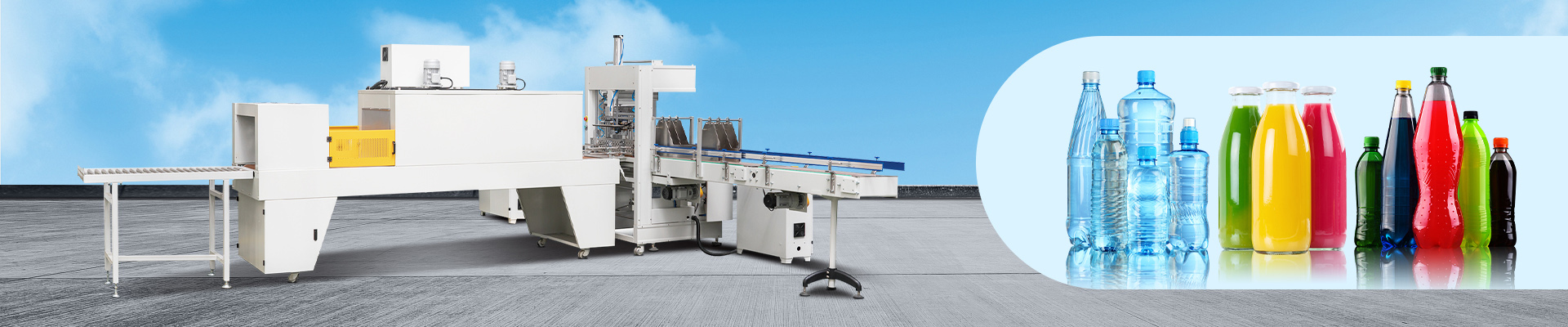
Zhangjiagang King Leader Machinery Co., Ltd. offers a state-of-the-art food packing machine for automated production lines. You can use this machine for beverages, beer, dairy products, washer fluids, and pesticides. The design focuses on stable performance and easy operation. You get a sleek machine that fits well into your existing workflow.
You can choose from different models, such as automatic heat shrink film wrapping or carton packaging. Each model helps you streamline your process and reduce packaging waste. The machine’s precision ensures you use only what you need, which cuts down on excess foam and other materials.
You find the food packing machine used in many industries. Beer manufacturers rely on it for efficient and accurate packaging. Dairy and beverage companies use it to meet strict quality standards. The machine also works well for products like washer fluids and pesticides.
Advanced packaging machinery now supports the use of biodegradable and recycled materials. You can switch to eco-friendly packaging without slowing down your production. Machines that promote compostable options help you support a circular economy. By using a food packing machine that adapts to sustainable materials, you help reduce foam waste and protect the environment.
Tip: When you invest in modern packaging solutions, you support both your business and the planet. Look for machines that offer flexibility, energy efficiency, and support for recyclable materials.
| Feature | Benefit |
|---|---|
| Automation | Reduces labor and material waste |
| Modular design | Adapts to new packaging materials |
| Energy efficiency | Lowers carbon footprint |
| Support for eco-friendly packs | Promotes sustainability and recycling |
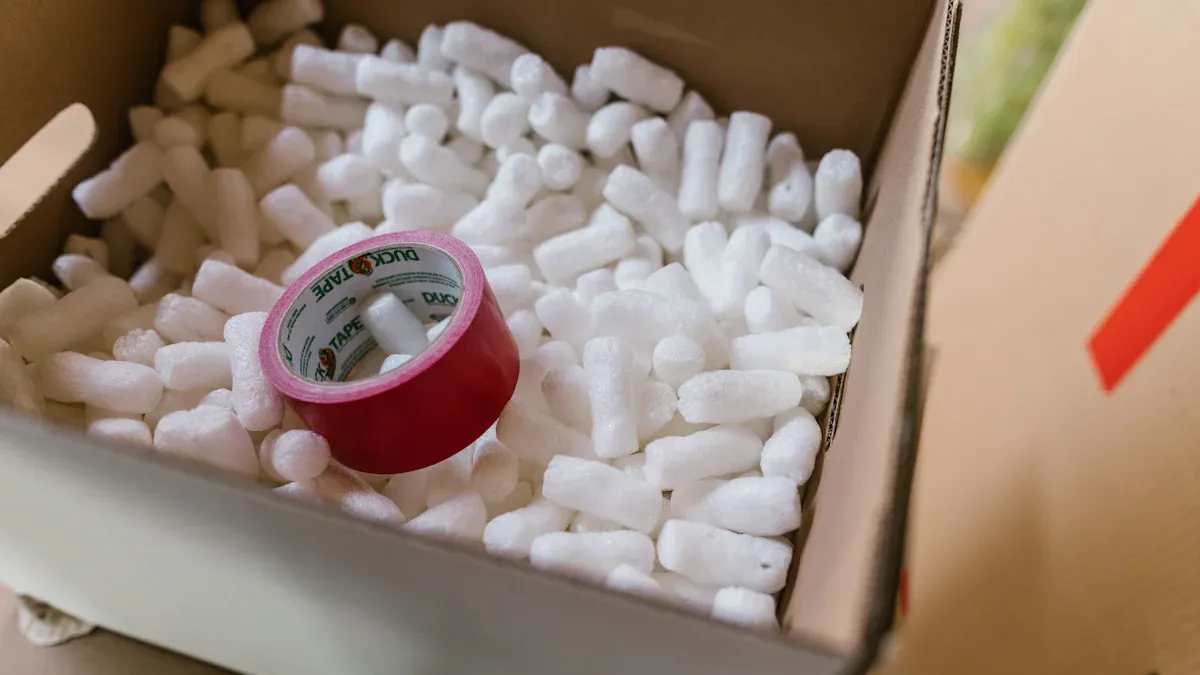
You can make a big difference by choosing eco-friendly packaging instead of foam. Many companies now offer packaging that protects your items and helps the environment. Here are some of the most effective alternatives you can use:
Bubble Wrapping: This material cushions fragile products well. Many types now use recycled plastic, which reduces waste. You can reuse bubble wrap for future shipments.
Custom Thermoformed Trays: These trays hold products in place and lower the risk of damage. They also give your package a neat, professional look. Some trays use recycled or recyclable plastics.
Suspension and Retention Packaging: This option uses less material and fits many product shapes. It saves storage space and looks great when you open the box. Many versions use recycled cardboard or paper.
Tip: When you shop online, look for sellers who use these alternatives. You help reduce foam waste every time you choose a greener option.
You can support brands that care about the planet. Many companies now use packaging that is better for the environment. Here are some ways you can spot and support these brands:
Biodegradable Packaging: This packaging breaks down naturally. It often uses cornstarch, mushroom fibers, or other plant-based materials.
Recyclable Packaging: Look for boxes, bottles, or wraps that you can recycle at home or at a local center.
Reusable Packaging: Some brands use glass jars, fabric bags, or sturdy boxes that you can use again and again.
Compostable Packaging: This packaging turns into soil in a compost bin. It often uses kraft paper or special plant-based plastics.
Post-Consumer Recycled (PCR) Packaging: This packaging comes from recycled materials. It helps keep waste out of landfills and saves resources.
Choosing these brands sends a message. You show companies that you care about the environment and want better packaging choices.
You can pack items safely without using foam. Many things around your home work well for shipping or storing fragile goods. Try these reusable materials:
Old newspapers or magazines
Towels, t-shirts, or fabric scraps
Cardboard pieces or shredded paper
Reusable shopping bags
Wrap your items tightly and fill empty spaces in the box. This keeps things from moving and breaking.
Get creative with your packing. You can use many everyday items instead of foam:
Egg cartons protect small, fragile objects.
Popcorn (plain and unsalted) works as a natural filler.
Brown paper bags can be crumpled for padding.
Socks or scarves add extra cushioning.
Note: Always choose clean, dry materials for packing. After unpacking, save these items for your next shipment or donate them to someone who needs packing supplies.
By choosing alternatives and reusing materials, you help reduce foam waste and protect the environment. Every small step counts!
You can see that not all packaging foam is recyclable. Use this table to help you sort your foam:
| Type of Foam Packaging | Recyclable | Notes |
|---|---|---|
| Expanded Polystyrene (EPS) | Yes | Accepted at special centers, not curbside |
| Polyethylene Foam (PE) | Yes | Check local rules, must be clean |
| Packing Peanuts | No | Compost if biodegradable, not for recycling |
| Foam Insulation | No | Contains chemicals, not accepted |
Always check your local guidelines and prepare foam by cleaning and sorting it. Choose eco-friendly materials, design for recyclability, and support brands that use sustainable packaging. Every small action helps protect the environment.
You can recycle expanded polystyrene (EPS) and polyethylene (PE) foam at special drop-off centers. Most curbside programs do not accept foam. Always check your local recycling rules before you recycle any foam.
Look for a resin code on the foam. EPS usually has a #6, and PE has a #4. If you cannot find a code, check your city’s recycling guide or ask your local recycling center for help.
Most cities do not accept Styrofoam in curbside bins. You should take clean Styrofoam to a special drop-off location. Placing it in the wrong bin can contaminate other recyclables.
If the peanuts dissolve in water, you can compost them. If not, reuse them or take them to a shipping store. Most recycling centers do not accept packing peanuts.
Foam is bulky and lightweight. It costs a lot to transport and process. Many recycling centers do not have the right equipment. Specialized machines, like densifiers, make recycling foam possible.
Yes! You can use paper, cardboard, or biodegradable packing materials. Many companies now offer compostable or recyclable options. Choosing these helps reduce waste and protect the environment.
Clean the foam and remove any labels or tape. Break large pieces into smaller parts. Make sure the foam is dry before taking it to a recycling center.
Use online tools like Earth911 or RecycleNation. Many shipping stores and some retailers also collect foam for recycling. Always call ahead to confirm what types they accept.