- All
- Product Name
- Product Keyword
- Product Model
- Product Summary
- Product Description
- Multi Field Search
Views: 0 Author: Site Editor Publish Time: 2025-11-12 Origin: Site
Efficiency, hygiene, and sustainability are no longer just buzzwords in the beverage industry; they are the essential pillars of a successful and competitive business. With consumer demand for bottled water continuing to rise, manufacturers face mounting pressure to increase output without sacrificing quality or profitability. The solution lies in automation.
Transitioning from manual to automated water filling systems is a strategic move that addresses the core challenges of modern production. This guide will explore how these advanced systems can significantly lower production costs while simultaneously elevating hygiene standards.
In this article, you’ll learn:
What Are Automated Water Filling Systems?
How Automated Water Filling Systems Lower Production Costs
How Automated Water Filling Systems Improve Hygiene Standards
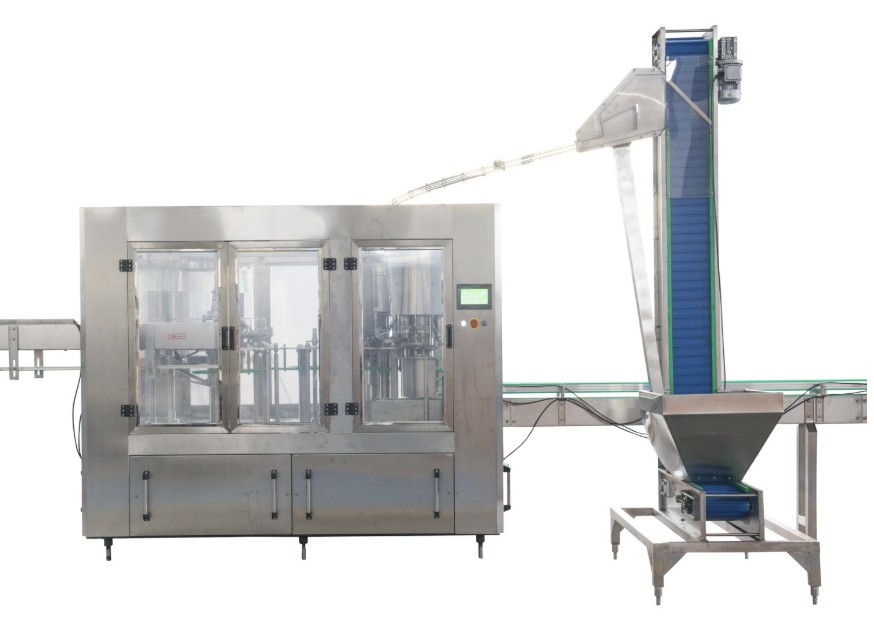
Automated water filling systems are sophisticated machines designed to fill and package water into bottles with minimal human intervention. Integrating advanced sensors, robotics, and computer controls, these systems ensure every bottle is filled accurately and hygienically.
Key components often include:
Advanced Sensor Systems: State-of-the-art sensors monitor fill levels, pressure, and flow rates, providing precise real-time control over the filling process.
Robotics and Automated Conveyors: Robotic arms and automated conveyors manage seamless bottle handling, from picking up empty bottles to positioning them for filling, capping, and labeling.
Clean-in-Place (CIP) Systems: Integrated CIP technology allows for automated internal cleaning and sterilization of the machine without requiring disassembly, ensuring consistent hygiene.
IoT Connectivity: Modern filling machines incorporate Internet of Things (IoT) capabilities, enabling remote monitoring, data analysis, and predictive maintenance to prevent downtime.
The beverage industry has seen a decisive shift away from traditional, labor-intensive filling processes. Manual methods were often slow, inconsistent, and prone to costly errors and contamination. As consumer demand for high-quality bottled water surged and regulatory standards tightened, the need for a more reliable solution became clear.
Automated systems emerged as the answer, offering the efficiency, hygiene, and sustainability required to stay competitive. Today, adopting this technology is not just about boosting productivity; it’s about future-proofing operations, minimizing resource waste, and building a brand that consumers can trust.
Investing in automation delivers a powerful return by tackling the most significant operational expenses in beverage production: labor, material waste, inefficiency, and downtime. By optimizing each of these areas, automated systems create a leaner, more profitable operation.
| Cost Area | Key Improvements | Data / Real-World Evidence | Financial Impact |
|---|---|---|---|
| Labor Costs | - Automates repetitive filling, capping, inspection- Workers shift to higher-value roles- Enables 24/7 operation without fatigue | - 68% of manufacturers improved productivity with reallocation (2023 study)- Overtime reduced from 1,200h → 240h annually- Mid-sized beverage plant saved $500,000/year | 15–25% reduction in labor expenses |
| Material Waste | - High-precision 0.5% dosing accuracy- Eliminates overfill, underfill, and spillage- Prevents “giveaway” losses | - McKinsey (2024): $27,500 saved/line/year- PMMI (2023): 30% waste reduction | Significant reduction in raw material loss |
| Production Efficiency | - Faster cycle times (hundreds/thousands bottles/hour)- Seamless integration with capping/labeling- Scalable without proportional cost increase | - Major bottled water brand: +35% speed increase- Bottleneck reduction 18–22%- Output can double with only 30–35% cost increase | Higher throughput at lower marginal cost |
| Downtime Reduction | - IoT sensors monitor machine health- Predictive maintenance prevents breakdowns- Real-time performance dashboards | - Predictive analytics accuracy 92%- Unplanned downtime reduced ~60% | Lower maintenance cost & more reliable uptime |
| Long-Term ROI | - Accumulated savings from all improvements- Lower operating costs year after year | - Most companies recover cost in 18–24 months | Strong ROI & sustained profitability |
One of the most immediate financial benefits of automation is a significant reduction in labor costs. Automated filling machines handle repetitive and physically demanding tasks, allowing businesses to reallocate their workforce to more strategic roles.
Replacing Repetitive Manual Tasks: Automation takes over bottle placement, filling, capping, and quality checks, tasks that are prone to human error and fatigue. A 2023 automation study found that 68% of manufacturers improved overall workforce productivity by reallocating staff from manual tasks to higher-value roles.
Operators Shifting to Higher-Value Roles: Instead of performing manual labor, employees can transition to overseeing operations, managing multiple machines, analyzing production data, and performing essential maintenance. This shift not only improves efficiency but also upskills your workforce.
24/7 Uninterrupted Operation: Unlike human operators, automated systems can run continuously without breaks or a decline in performance. They complete production cycles up to 40% faster than manual methods and eliminate the need for costly overtime pay. One company reported reducing its annual overtime from 1,200 hours to just 240 after automating its filling line.
Real-World Savings: The impact on labor costs can be substantial. One mid-sized beverage company reported saving approximately $500,000 annually after installing an automated filling system. Most businesses see their labor expenses drop between 15–25% after implementation.
In a high-volume production environment, even minor inaccuracies in filling can lead to significant financial losses over time. Automated systems use high-precision technology to ensure every bottle is filled correctly, dramatically reducing material waste.
High-Precision Sensors for Exact Fill Levels: Modern machines can achieve dosing accuracy within 0.5%, eliminating costly problems like overfilling, underfilling, and spillage. This precision ensures you are not giving away free product or falling short of label claims.
Reduction in “Giveaway” Losses: Overfilling, even by a small margin, adds up. By ensuring exact fill levels, automation prevents these “giveaway” losses, protecting your profit margins.
Optimized Raw Material Use: According to a 2024 McKinsey report analyzing 142 manufacturing plants, automated filling machines save an average of $27,500 per production line annually in raw material costs alone. A separate PMMI study from 2023 found that food and beverage companies reduced material waste by up to 30% per year after switching from manual to automated systems.
Speed and consistency are critical for meeting market demand. Automated water filling systems are engineered for high-speed, continuous operation, enabling manufacturers to significantly increase their production output.
Faster Cycle Times: High-speed systems can process hundreds or even thousands of bottles per hour, allowing you to scale production to meet growing demand and reduce lead times. One major bottled water manufacturer increased its production speed by 35% after replacing its manual line with an automated system.
Seamless Integration with Other Equipment: Modern filling machines integrate seamlessly with capping, labeling, and packaging systems. This synchronized workflow reduces bottlenecks by an estimated 18–22% compared to using standalone equipment, creating a smoother and more efficient production line.
Scalable Production: Automation allows you to scale your output without a proportional increase in operational costs. Data shows that manufacturers using automated technology can double their output capacity while only increasing operational costs by 30–35%.
Unplanned downtime is one of the most significant hidden costs in manufacturing. Automated systems equipped with IoT technology use predictive maintenance to identify potential issues before they lead to costly breakdowns.
IoT Sensors Monitoring Equipment Health: Embedded sensors monitor machine health, vibration, pressure, and energy use in real-time. This data is fed to a central dashboard, providing operators with a complete overview of equipment performance.
Early Detection of Failures: Predictive analytics can forecast maintenance needs with up to 92% accuracy. This allows teams to schedule repairs proactively, reducing unplanned downtime by as much as 60%.
Consistent Uptime: By preventing unexpected failures, predictive maintenance ensures consistent uptime, leading to lower maintenance expenditures and a more reliable production schedule.
While the initial investment in an automated filling system may seem substantial, the long-term return on investment is compelling. Most companies recover their initial costs within 18 to 24 months, with savings accumulating year after year. The combination of reduced labor costs, minimized material waste, increased efficiency, and lower maintenance expenses makes automation a financially sound strategic investment.
In the beverage industry, hygiene is non-negotiable. Contamination can lead to product recalls, regulatory penalties, and irreparable damage to a brand’s reputation. Automated water filling systems are designed to meet the strictest hygiene standards, ensuring product safety from start to finish.
| Hygiene Area | Key Hygiene Enhancements | How It Works | Impact on Product Safety |
|---|---|---|---|
| Closed-Loop Filling Process | - Food-grade stainless steel construction- Fully enclosed environment | Bottles are rinsed, filled, and capped within a sealed system with minimal human contact | Greatly reduces airborne and touch-based contamination |
| Sterilization & Bottle Handling | - Automated bottle washing & disinfection- Robotic bottle handling | Sterilized air/water washes bottles; robotic arms eliminate manual contact | Prevents microbial growth and ensures bottle cleanliness |
| CIP (Clean-in-Place) | - Automated internal cleaning & sanitizing cycles- No disassembly required | CIP uses detergents and sanitizers in programmed cycles | Ensures consistent, verifiable cleaning with no residue or microbial buildup |
| Accurate Filling & Compliance | - High-precision fill levels- Consistent volume accuracy | Sensors ensure every bottle meets exact label claims | Prevents regulatory warnings & strengthens brand trust |
| Secure Capping & Sealing | - Tamper-evident closures- Airtight seals | Automated cappers apply uniform sealing pressure | Prevents post-filling contamination during storage & transport |
Automated systems minimize human contact with the product, which is a primary source of contamination.
Hygienic Construction: Machines are built with high-quality stainless steel and other food-grade materials that are resistant to corrosion and easy to clean.
Reduced Human Interference: The entire process, from bottle rinsing to filling and capping, occurs within a closed environment, significantly lowering the risk of airborne or contact-based contamination.
Ensuring bottles are sterile before filling is a critical step in preventing microbial growth.
Automated Disinfection: Systems can include automated bottle washing and disinfection stations that use sterilized water or air to clean bottles thoroughly before they reach the filling nozzle.
Robotic Handling: Robotic arms handle the bottles, eliminating the need for manual contact and further reducing the risk of introducing contaminants.
Maintaining the internal cleanliness of filling equipment is essential for product safety.
Automatic Cleaning Cycles: CIP systems run automated cleaning and sterilization cycles using detergents and sanitizing agents, all without needing to disassemble the machine.
Consistent and Verifiable Cleaning: This automated process ensures that cleaning is performed consistently and effectively every time, removing any residue or microbial buildup.
Meeting label claims for volume is a key regulatory requirement.
Precise Fill Levels: The high accuracy of automated fillers ensures that every bottle contains the exact amount of product stated on the label, preventing consumer complaints and potential warnings from regulatory bodies.
Protecting Brand Reputation: Consistent quality and accurate filling build consumer trust and protect your brand from the negative consequences of non-compliance.
The final step in the filling process is just as important as the first. A secure seal protects the product’s integrity during storage and transportation.
Tamper-Evident Closure: Automated capping systems apply secure, tamper-evident closures that give consumers confidence in the product’s safety.
Preventing Microbial Exposure: A perfect seal prevents exposure to microbes and other contaminants after the product leaves the facility, ensuring it reaches the consumer in a safe and hygienic state.
Beyond cost savings and hygiene, automation offers other strategic advantages that can help your business thrive in a competitive market.
Supporting Sustainability Goals: Modern systems are designed with energy-efficient motors and optimized processes that reduce water and electricity consumption.
Scalability for Growth: Automated lines can be easily adjusted or expanded to accommodate new bottle sizes, product SKUs, or increased production demand.
Enhancing Brand Trust: The consistency and quality delivered by automation lead to fewer product recalls and reinforce consumer confidence in your brand.
The technology behind automated filling is constantly evolving. Here are a few trends that will shape the future of the industry:
AI-Driven Optimization: Artificial intelligence will enable systems to dynamically adjust flow rates, pressure, and other parameters in real-time, further improving accuracy and efficiency.
Full Industry 4.0 Integration: Expect even deeper integration with centralized factory control systems, with remote monitoring and cloud-based dashboards becoming standard.
Enhanced Sustainable Designs: The focus on sustainability will continue, with manufacturers developing machines made from eco-friendly materials and designed for an even lower carbon footprint.
Data-Driven Quality & Traceability: Advanced analytics will provide complete traceability for every batch, with digitized documentation simplifying compliance and quality control.
The decision to invest in an automated water filling system is more than just an operational upgrade; it is a strategic move toward a more efficient, profitable, and reputable future. By drastically lowering production costs, elevating hygiene to meet the highest standards, and providing a strong long-term ROI, automation strengthens your competitiveness in the bottled water market.
The evidence is clear: businesses that embrace this technology are better positioned to meet consumer demand, adapt to market changes, and build a resilient and successful brand. The time to transition is now.
At KLD Machinery, we provide advanced, high-precision water filling machines engineered for efficiency, hygiene, and long-term reliability. Our experts support you from system design to installation, ensuring the right automation solution for your production needs.
Ready to modernize your bottling line? Connect with our team today!